The image of Our Lady of Grace that fell from the sky in Catas Altas da Noruega, state of Minas Gerais/Brazil
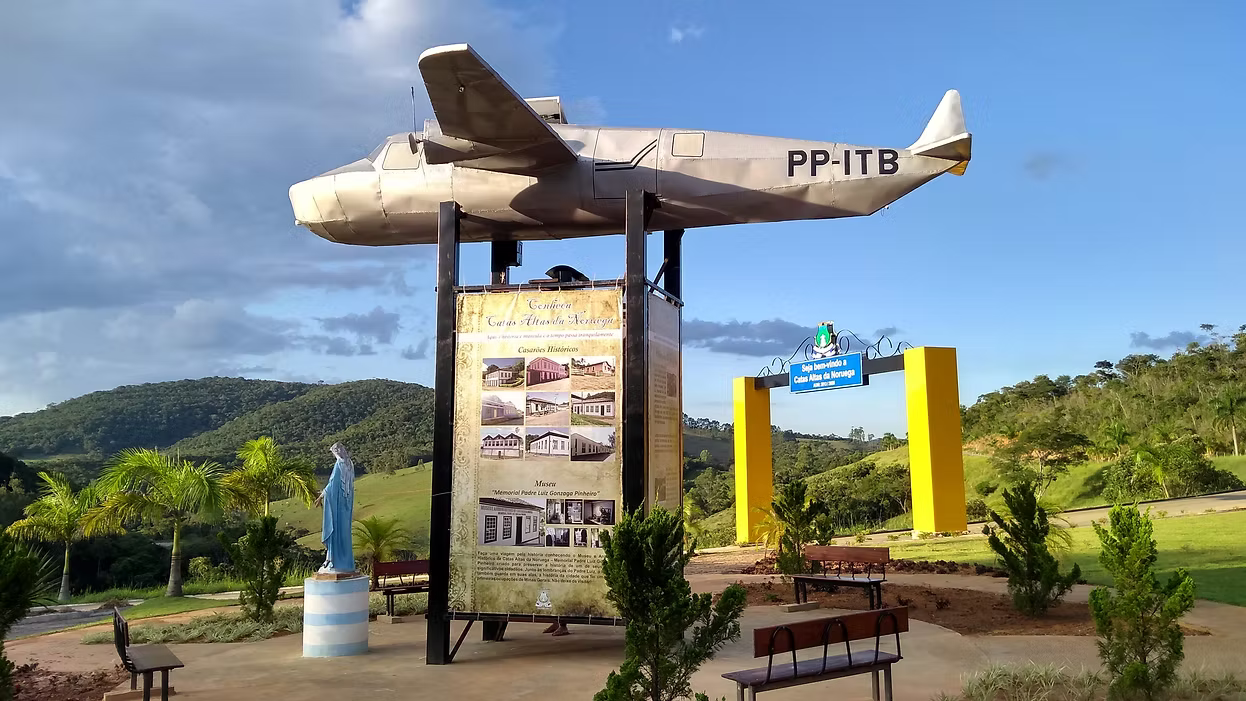
On July 29, 1949, an extraordinary event forever marked the history of the municipality of Catas Altas da Noruega, in state of Minas Gerais/Brazil. That afternoon, a plane belonging to Companhia Itaú Transportes Aéreos, en route from Rio de Janeiro to Belém, suffered a mechanical failure in flight. To lighten the aircraft's weight and allow for a safe landing, part of the cargo was jettisoned over the region. Among tires, fabrics, medicines, and other objects, there were also three religious statues
As residents watched the plane cross the sky leaving a trail of smoke, no one imagined that moment would become one of the town's greatest symbols of faith. Of the three sacred statues that fell, two were destroyed upon impact.
The third, a small statue of Our Lady of Graces, was found intact atop a pile of gravel, completely undamaged.
During that same period, the town's newly arrived parish priest, Father Luiz Gonzaga Pinheiro, was preparing for the feast of Saint Gonçalo do Amarante. Devoted to Our Lady of Graces, he was anxiously awaiting a statue of the Virgin he had ordered to participate in the celebrations, but it had not yet arrived. He assumed the statue had been lost.
When people learned that a statue of Our Lady had failed to be delivered, they brought the one that had fallen from the sky to the parish so the priest could check if it was the one he was waiting for. And indeed, it was the statue of Our Lady of Graces he had ordered. He received it with profound emotion, viewing the event as a sign of Divine Providence.
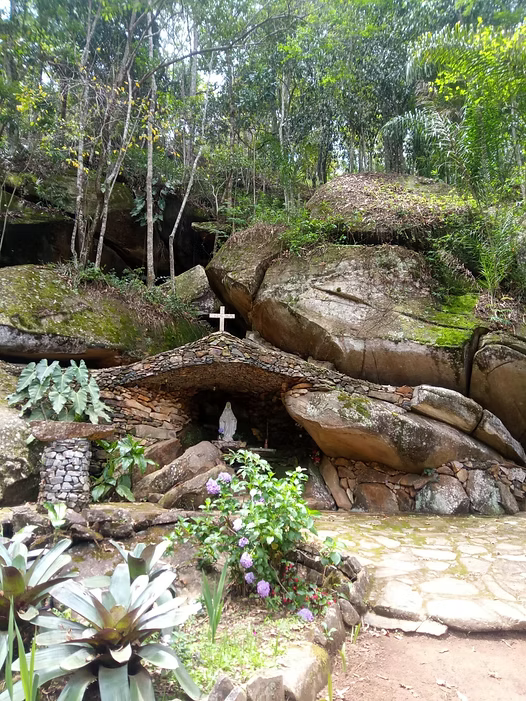
The statue came to occupy a place of honor in the community's religious life. Little by little, news of the event spread beyond the town's borders, attracting visitors and inspiring an ever-growing devotion. The site where the statue was found was transformed into a place of prayer and pilgrimage, later featuring a grotto built in honor of Our Lady of Graces, where the faithful continue to visit to give thanks and renew their faith..
Source: Museu e Arquivo Histórico de Catas Altas da Noruega
Over the years, countless devotees began attributing graces obtained and favors received to the intercession of Our Lady of Graces. Testimonies multiplied from people claiming to have received healings, protection, help in difficult times, and answers to their prayers. These expressions of faith further strengthened popular devotion and established the statue as one of Catas Altas da Noruega's greatest religious treasures.
The constant presence of pilgrims transformed the municipality into an important religious tourism destination. Every year, especially during the Jubilee of Our Lady of Graces, thousands of the faithful participate in Masses, novenas, processions, and pilgrimages, renewing a tradition that spans generations. The monument at the entrance of the town, the Grotto of Our Lady of Graces, the museum, and the sanctuary keep alive the memory of that 1949 event.
For residents and pilgrims, the fact that the statue remained intact amidst the fall represents a sign of Mary's protection, while the countless accounts of graces received continue to nourish the faith of those who visit Catas Altas da Noruega in search of spiritual comfort, thanksgiving, and trust in the intercession of Our Lady of Graces.
References: Arquidiocese Mariana, Prefeitura Municipal de Catas Altas da Noruega, Jornal Correio da Cidade, Poços Já, Museu e Arquivo Histórico de Catas Altas da Noruega, @mais_perto_ddeus, Text written with AI assistance.