The miracle of the image of Our Lord of Good Hope throwing his golden sandal to a poor believer to pay his debts: a symbol of Divine Providence for our moments of uncertainty when we seek God with faith!
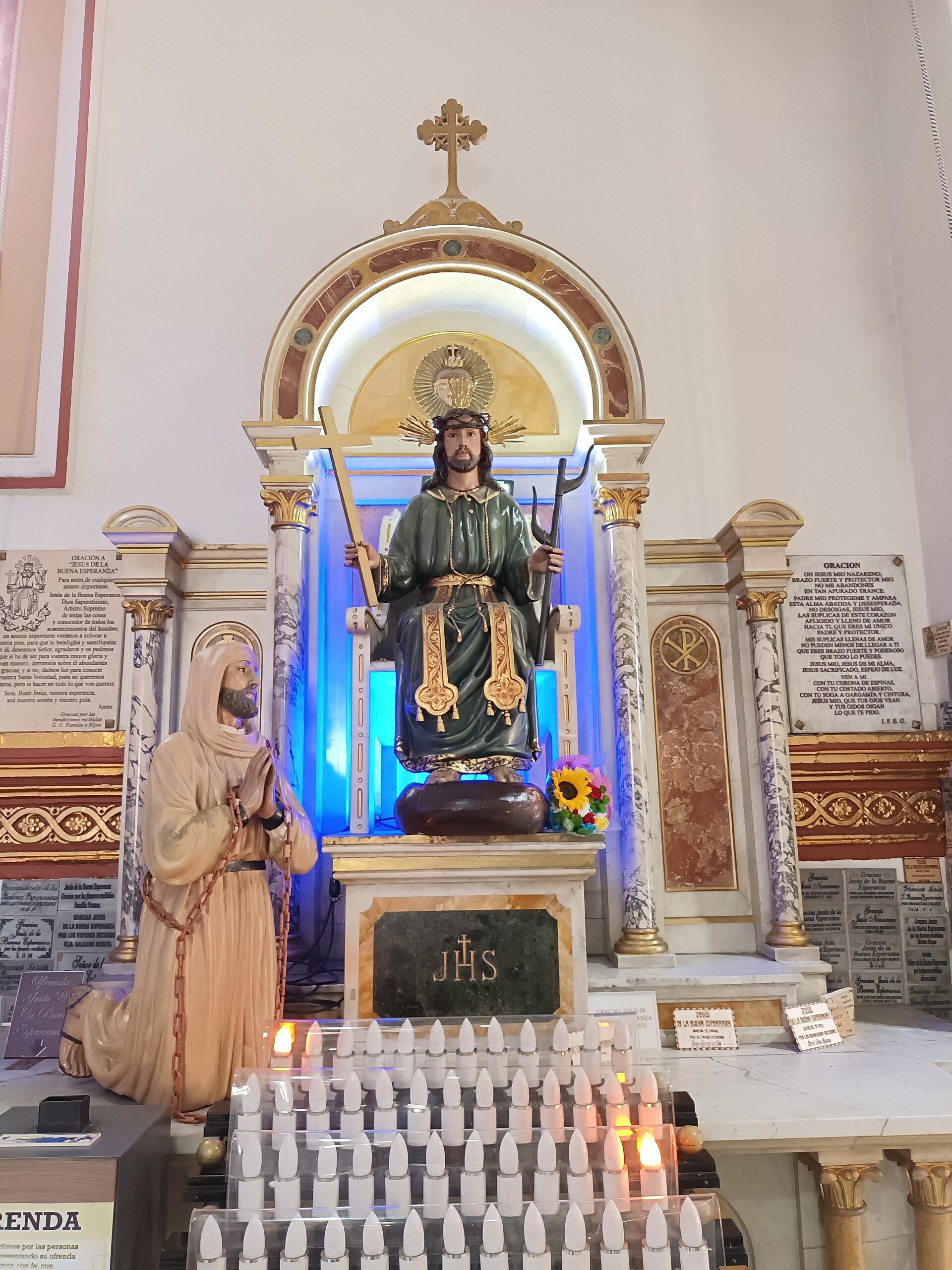
The tradition of Our Lord of Good Hope (Jesús de la Buena Esperanza) dates back to the year 1652 in the city of Quito, Ecuador, where an ancient and miraculous image of Jesus Christ is venerated. One day, a mule walked alone through the streets of the city carrying a large crate. Upon reaching the entrance of the Convent of Saint Augustine, the animal lay down on the ground and refused to move. Despite all the community's efforts, no one could get it to leave.
Faced with this unusual event, they removed the ropes and padlocks from the crate on the mule to open it. Inside, they found a beautiful life-sized image of Jesus, seated upon His throne, dressed in a velvet tunic, wearing the crown of thorns, and shod in golden sandals adorned with precious stones. His Face was deeply expressive, reflecting pain, leaving an immediate impact on all who saw Him.
The friars tried to carry the image into the church, but it became so heavy that no one could move it. Only when they decided to leave it at the entrance of the convent were they able to place it there. The incident was understood as a sign that this was the place chosen by the Lord to remain. From then on, many faithful began visiting it, and the fame of the favors granted through His intercession spread rapidly.
Among the most famous miracles is that of Gabriel Cayancela, a simple family man who lived in extreme poverty. Finding no human assistance to overcome his difficulties, he spent a long time praying before the image, begging Jesus to come to his family's aid.
While he remained in prayer, an extraordinary event occurred: the image of Jesus bent its right leg, as if preparing to kick, and launched its golden sandal toward Gabriel's hands, who caught it. Convinced that this was God's answer to his request, Gabriel took the sandal to sell it and pay off his debts.
The jeweler, however, recognized the piece as belonging to the venerated image of Our Lord of Good Hope. Suspecting theft, he reported Gabriel to the authorities. Arrested and found guilty, he was sentenced to death, despite insisting that he had received the sandal from the Lord Himself.
Before the sentence was carried out, Gabriel asked to pray one last time before the image as his final request. In the presence of the authorities, the friars, and a large crowd, he declared his innocence and entrusted his cause to Christ. He prayed: "Lord, You helped me with my problem, but because of it, I have ended up in a much worse one..."
At that moment, before everyone's eyes, the second miracle occurred: now the image of Jesus bent its left leg, as if preparing another kick, and launched the other golden sandal into Gabriel's hands, and he caught it once more.
The miraculous sign caused great astonishment. The authorities recognized that Gabriel was telling the truth, revoked his sentence, and restored his freedom. According to tradition, the sandal was purchased by the authorities themselves for its value in gold, allowing him to escape poverty and provide for his family with dignity.
Since then, devotion to Our Lord of Good Hope grew even stronger, making the image a symbol of trust in Divine Providence and the certainty that Christ never abandons those who turn to Him with faith.
Following this famous Miracle of the Golden Sandals, the ecclesiastical authorities of Quito investigated the event, recognized it as miraculous, and formally permitted the continuation of public worship and pilgrimages. Throughout the 18th and 19th centuries, bishops across Latin American dioceses (including Ecuador and Chile, where the devotion expanded) granted formal approvals for novenas, prayers, and indulgences to the faithful devoted to Jesús de la Buena Esperanza.
References: Parroquia Jesús de la Buena Esperanza (Guayaquil – Equador), Parroquia San Jacinto (Camaná – Peru), Cavaleiros da Virgem, Caballeros de la Virgem, Wikimedia Commons, Text written with AI assistance.